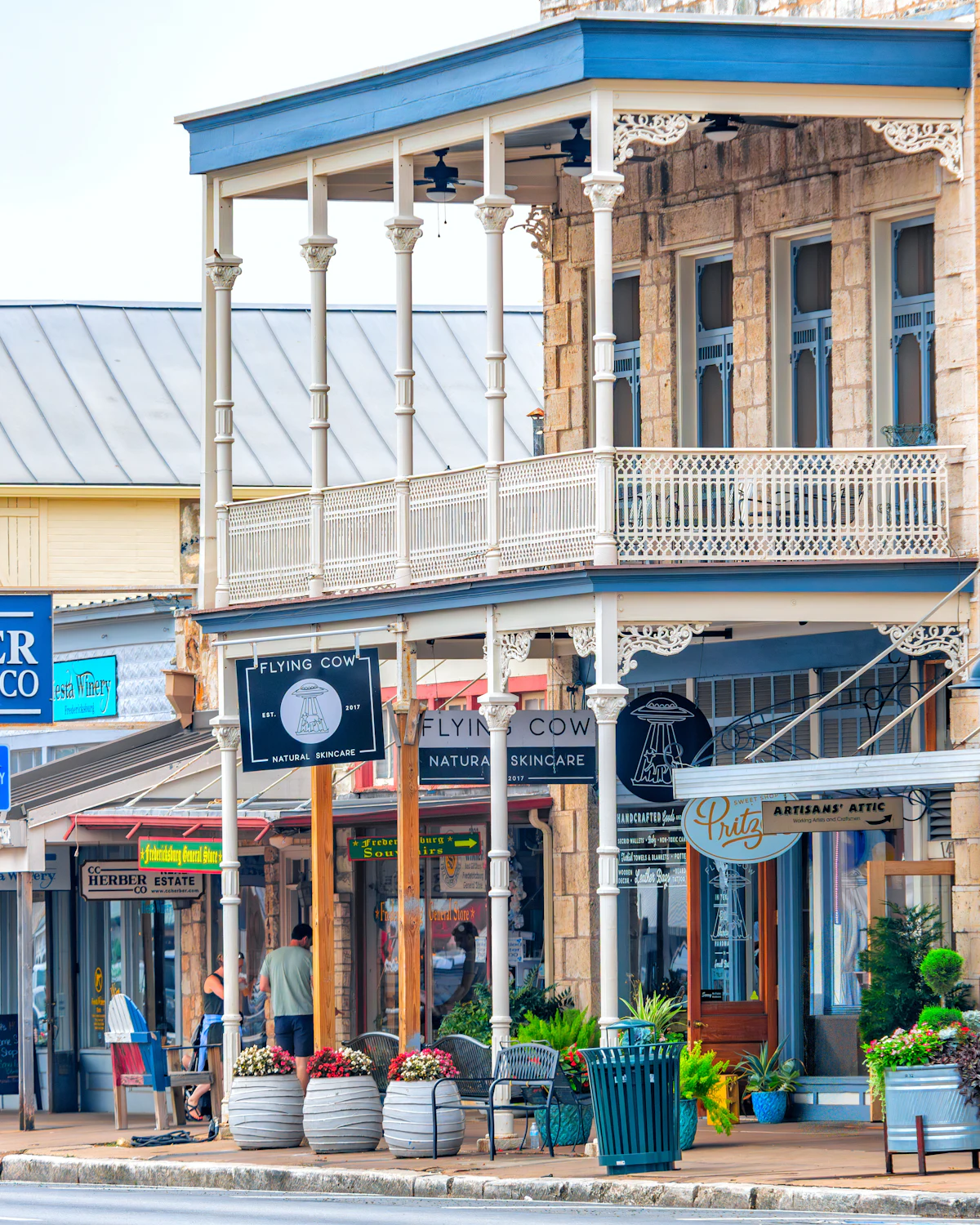
Albuquerque sign permit at a glance
| Question | Short answer |
|---|---|
| Do I need a permit? | Yes for a new sign that is over 24 sq ft, taller than 8 ft (measured from the ground to the top of the sign), illuminated, moving, freestanding, projecting, portable or electronic (§14-16-5-12(D)(1)). A small unlit wall sign under all those limits, a copy change on an approved sign of the same size, and temporary signs within Table 5-12-7 need none (no-permit list). Other cities compared. |
| How big can my wall signs be? | All wall signs on a façade together may cover 5% of it in MX-T and MX-FB-ID, 10% in MX-L, 15% in MX-M, MX-H, MX-FB-FX, MX-FB-AC, MX-FB-UD and NR-C, and 25% in NR-LM and NR-GM, counting doors and windows in the façade area (Table 5-12-3). Other cities compared. |
| What does it cost? | $10 plus $0.70 per sq ft of sign or $70, whichever is more, so any sign up to 100 sq ft pays $10 + $70 = $80. A sign put up without a permit: $10 plus $1.45 per sq ft or $145, whichever is more (fee table). Other cities compared. |
| How long does it take? | Neither the IDO nor the City's sign pages give a review time. The IDO only says an incomplete application is flagged in writing within 5 business days (§14-16-6-4(G)(3)) (timing). Other cities compared. |
| When does the permit run out? | A sign permit is valid for 1 year (Table 6-4-3), with one extension of up to another year if you ask in writing before it expires (§14-16-6-4(W)(4)). An electronic sign permit lasts 1 year and cannot be extended. The City's application form says 6 months (see below). Other cities compared. |
| Who files? | A holder of one of the licenses the City lists: GB-98 or GS-23 to build the sign and its foundation but not its electrical work, or ES-01 or ES-98 to install electrical signs as well (City sign regulations page). Other cities compared. |
| Sidewalk A-frame sign? | Allowed with a sign permit for restaurants, bars, indoor entertainment and retail: one per establishment, up to 6 sq ft a side, 2.5 ft wide and 3 ft tall, not within 2 ft of the curb, with a clear path of at least 3 ft (6 ft on a sidewalk 8 ft or wider), taken in after hours (Table 5-12-4) (A-frame rules). Other cities compared. |
| Blade or projecting sign? | One per establishment in the mixed-use and NR-C, NR-LM and NR-GM districts, no larger than the freestanding sign allowed there, projecting no more than 30 inches from the façade, and at least 8 ft above any sidewalk it hangs over. On a street frontage where you have a freestanding sign, no projecting sign (Table 5-12-3, §14-16-5-12(E)(3)). Other cities compared. |
| Grand opening banner? | Temporary signs need no permit: up to 4 per premises with 16 sq ft between them, unlit, out of the public right-of-way, for no more than 15 calendar days (Table 5-12-7, §14-16-5-12(I)) (temporary signs). Other cities compared. |
| Digital or LED sign? | One per premises, as a freestanding, wall or canopy sign, with automatic dimming, static images that change no more often than once every 8 seconds, and a permit renewed every year. Banned in HPO zones and historic districts, within 660 ft of Alameda Boulevard, Griegos Road, Rio Grande Boulevard, Tramway Boulevard and Unser Boulevard, and within 1,320 ft of Major Public Open Space (§14-16-5-12(H)). Other cities compared. |
| Already installed without a permit? | The fee schedule charges $1.45 per sq ft or $145, whichever is more, plus $10, for signs erected without a permit, about double the regular rate. Code Enforcement handles signs on private property and may require removal (fee table). Other cities compared. |
Zone limits Checker Fees How to apply Timing A-frames Temporary signs Where City pages disagree FAQ
Albuquerque does not give wall signs a flat number or a figure per foot of frontage. In the mixed-use and the NR-C, NR-LM and NR-GM districts, all wall signs on a façade together may cover a set percentage of that façade's area, and the area counts the doors and windows in it. Measure the façade, multiply by the percentage for your zone district, and subtract the wall signs already on it. Freestanding and projecting signs are capped separately, by zone district and by the street the sign faces.
Albuquerque sign limits by zone district (Table 5-12-3)
These are the on-premises sign standards for the mixed-use districts and NR-C, NR-LM and NR-GM, from IDO Table 5-12-3. In NR-BP, NR-SU, NR-PO, PD and PC, signs follow the approved master development plan or site plan instead. Find your zone district on the City's IDO zoning map before you read across.
| Standard | MX-T, MX-FB-ID | MX-L | MX-M, MX-H, MX-FB-FX, MX-FB-AC, MX-FB-UD, NR-C | NR-LM, NR-GM |
|---|---|---|---|---|
| Wall signs, all on one façade | 5% of façade area | 10% of façade area | 15% of façade area | 25% of façade area |
| Wall signs, number | No limit within the area; where two establishment frontages meet with no side setback, no wall sign within 2 ft of the shared edge | |||
| Window signs | No more than 15% of window and door area; on the ground floor, 25% of the area between 4 ft and 8 ft above ground | |||
| Freestanding sign, number | 1 per premises per street frontage, and only where the premises has at least 100 ft of street frontage (or through a Joint Sign Premises) | |||
| Freestanding sign, area | 50 sq ft | 100 sq ft | 100 sq ft on a local or collector street; 200 sq ft on an arterial street or interstate; 300 sq ft within 200 ft of an interstate through lane and visible from it | |
| Freestanding sign, height | 9 ft | 18 ft | 26 ft | |
| Projecting sign | 1 per establishment (1 per establishment frontage in MX-H and MX-FB); area no larger than the freestanding sign allowed; 30 in from the façade at most. On each street frontage, a freestanding sign or projecting signs, not both | |||
| Canopy sign | 1 per 50 ft of frontage (MX-FB: 1 per entry or exit), up to 50% of the building frontage width (MX-FB-AC and MX-FB-UD: full width); letters on vertical surfaces no taller than 24 in | |||
| Marquee sign | 1 per façade, counted with the wall signs on that façade; message surface up to 3 ft tall (5 ft in MX-FB-AC and MX-FB-UD); projecting 50% of the way over the sidewalk or 10 ft, whichever is less | |||
| Rooftop sign | Only near Downtown, in UC-MS-PT areas and in the small areas listed in §14-16-5-12(F)(3): 1 per building, up to 75 sq ft, and 15 ft tall or 25% of the building height, whichever is less | |||
Source: Integrated Development Ordinance, effective May 6, 2026 (PDF), §14-16-5-12(F)(2), Table 5-12-3 (IDO pages 376 and 377), read on documents.cabq.gov 23 October 2026. The same text is on abq-zone.com, §5-12 Signs.
More numbers from §14-16-5-12 — 8 items
- Over a sidewalk or driveway. Any part of a sign over a public right-of-way, private way or private walkway needs at least 8 ft of clearance above the walkway and 12 ft above a vehicle driving surface, and approval from the City (public right-of-way) or the owner of the walkway (§14-16-5-12(E)(3)).
- Above the roofline. Building-mounted signs other than wall signs may extend no more than 2 ft above the wall of the building, with exceptions in East Downtown, Downtown, Nob Hill/Highland and Uptown (§14-16-5-12(E)(4)(d)). Freestanding signs may not use guy wires, bracing or external supports.
- Brightness at night. The white parts of a lit sign may not exceed 108 nits in lighting zone Lz1, 323 nits in Lz2 and 685 nits in Lz3 during the hours of darkness (Table 5-12-1). No part of a sign may move or rotate more than once each 10 seconds, or change its message more than once each 8 seconds (§14-16-5-12(E)(5)(a)).
- Next to homes. Within 50 ft of a Residential zone district, illuminated signs are prohibited on lots with low-density residential development, and only 1 sign per premises may stay lit between 11:00 PM and sunrise (§14-16-5-12(E)(5)(b)). A sign that turns on and off or changes brightness may not be within 200 ft of a Residential zone district and visible from it, or within 330 ft of Major Public Open Space.
- Residential zone districts (Table 5-12-2). A non-residential use gets 1 building-mounted or freestanding sign per street frontage, up to 24 sq ft, a freestanding one no taller than 6 ft. Multi-family development in R-ML and R-MH gets wall signs up to 24 sq ft and 1 monument sign per street frontage, 24 sq ft and 4 ft tall. A home occupation's wall sign is limited to 2 sq ft (4 sq ft in R-A).
- Small areas with their own caps. East Gateway: projecting and freestanding signs up to 75 sq ft. La Cueva: monument signs only, 50 sq ft and 8 ft tall. Sunport Boulevard: wall signs up to 15% of the façade, freestanding up to 75 sq ft and 12 ft (26 ft for one sign on a property over 5 acres within 200 ft of Sunport Boulevard). Unser Boulevard: freestanding up to 75 sq ft and 12 ft (§14-16-5-12(F)(3)).
- Neon on Main Street (MS) areas. A sign whose face is at least 50% luminous neon may be up to 50% larger if freestanding, projecting or rooftop (no more than 250 sq ft), or 25% larger if building-mounted; a freestanding neon sign may reach 30 ft (26 ft near an interstate) (§14-16-5-12(F)(4)(a)). The fee schedule waives fees for a Central Avenue neon sign.
- Billboards. Off-premises signs are prohibited in Residential districts, in MX-T, MX-FB and NR-PO, within 660 ft of I-25 or I-40 and in 17 listed small areas; a new one is approved only when an existing off-premises sign of equal or greater area is removed (§14-16-5-12(G)).
Source: IDO §14-16-5-12 (IDO pages 369 to 394), read on documents.cabq.gov 23 October 2026.
Check your sign against your zone district
This applies Table 5-12-3, the permit triggers in §14-16-5-12(D)(1) and the clearance rule in §14-16-5-12(E)(3) to a wall, freestanding or projecting sign in a mixed-use, NR-C, NR-LM or NR-GM district, and prices it from the General Planning Fee Schedule updated January 17, 2025. Overlay zones, small areas and historic protection can add rules it does not see.
Calculated from IDO §14-16-5-12 (D)(1), (E)(3), (E)(5)(b) and Table 5-12-3, and the General Planning Fee Schedule updated as of 1/17/2025, both read 23 October 2026. Any Building Safety fee for the structural or electrical review is not included.
Signs that need no permit — 6 items
A sign that needs no permit still has to meet the standards in §14-16-5-12.
- Small unlit signs. A new sign needs a permit only if it meets one of the triggers in §14-16-5-12(D)(1)(a): over 24 sq ft, taller than 8 ft, illuminated, moving parts, freestanding or projecting, portable, or electronic. A wall sign that meets none of them needs no permit.
- Copy changes. Changing the message or swapping the sign face on an approved painted or printed sign structure, a marquee or a similar approved sign, if the size does not change (§14-16-5-12(D)(2)(a)).
- Maintenance. Painting, cleaning and normal repair of a sign or its structure, unless a structural change is made (§14-16-5-12(D)(2)(b)).
- Temporary signs within Table 5-12-7: up to 4 per premises, 16 sq ft in all, for up to 15 calendar days (§14-16-5-12(I)(1)).
- Government and utility signs. Signs put up by a State or federal agency or a public utility are outside §14-16-5-12, though they should meet it as far as practicable (§14-16-5-12(B)(4)).
- Things the IDO does not count as signs: names and dates carved into stone or metal and built into the structure, signs required by law, utility safety signs, signs on a vehicle that is not parked to serve as a sign, and temporary holiday decorations (§14-16-7-1, Sign).
Source: IDO §14-16-5-12(B), (D) and (I), and §14-16-7-1, read 23 October 2026.
How much does an Albuquerque sign permit cost?
The Planning Department's General Planning Fee Schedule prices a sign permit by area with a floor: $0.70 per square foot or $70, whichever is more, plus a $10 charge. The break-even is 100 sq ft, so every sign of 100 sq ft or less pays the same $10 + $70 = $80. These amounts are from the schedule marked “Updated as of 1/17/2025”.
| Application | $10 charge | Application fee | Appeal |
|---|---|---|---|
| Sign Permit | $10 | $0.70 per sq ft or $70, whichever is more | $130 ($75 notice + $55 filing) |
| Electronic Sign Permit | — | Same as a Sign Permit, but annual | $130 |
| Signs erected without a permit | $10 | $1.45 per sq ft or $145, whichever is more | $130 |
| Alternative Signage Plan | $10 posted sign + $10 | $45 (total $65) | $130 |
| Central Avenue Neon Sign | — | Fees waived ($0) | $130 |
- Up to 100 sq ft: $10 + $70 = $80; put up without a permit, $10 + $145 = $155.
- 150 sq ft: $10 + $105 = $115; without a permit, $10 + $217.50 = $227.50.
- 300 sq ft: $10 + $210 = $220; without a permit, $10 + $435 = $445.
| Code Enforcement fees in the same schedule | Fee |
|---|---|
| Electronic Sign Registration | $200 |
| Electronic Sign Fee | $150 |
Source: City of Albuquerque Planning Department, General Planning Fee Schedule (PDF), pages 2 and 5, “Updated as of 1/17/2025”, linked from the City's Code Enforcement FAQs; read 23 October 2026. The worked amounts are our arithmetic from the schedule.
What the schedule does not settle
The schedule prints the sign permit's $10 in the column headed “Facilitated Meeting Fee”, although IDO Table 6-1-1 lists no facilitated meeting for a sign permit; we show it as a $10 charge and do not guess what it pays for. The schedule does not say what the Electronic Sign Registration ($200) and Electronic Sign Fee ($150) cover or whether they are owed on top of the electronic sign permit.
A sign that needs structural or electrical review also goes through Building Safety: the application form has boxes for an International Building Code review, a valuation, and building and electrical inspections. The fee schedule sends those fees to a Building Safety fee page that returned “not found” when we tried it on 23 October 2026, and the Building Safety fee handout we could open, Plan Review and Building Permit Fees (revised April 2010), prices work by valuation and has no line for signs. We could not confirm what Building Safety charges for a sign, so we give no figure. Ask at the permit counter.
How to apply for an Albuquerque sign permit — 7 steps
Steps from the City's Sign Regulations page, the Application for Sign Permit (PDF, updated 7/23/2013) and IDO §14-16-6-1, 6-4 and 6-5(C), all read 23 October 2026.
How long it takes
No review time is published. §14-16-6-5(C) sets no deadline for the Zoning Enforcement Officer's decision, and the City's Sign Regulations page gives none. The general procedures say the Planning Director must tell you in writing within 5 business days if the application is incomplete, and an application not completed within 60 calendar days of that notice is treated as abandoned (§14-16-6-4(G)(3)). Ask the Planning Department for its current turnaround before you book an installer.
Source: IDO §14-16-6-4(G), 6-4(W) and 6-5(C), read 23 October 2026.
Sidewalk A-frames (portable signs)
The IDO calls an A-frame or sandwich board a portable sign. Every portable sign needs a sign permit (§14-16-5-12(D)(1)(a)), and only some businesses may have one.
- Who: only uses in the Food, Beverage, and Indoor Entertainment or Retail Sales categories of Table 4-2-1 (§14-16-5-12(F)(4)(b)).
- How many and how big: 1 per establishment, 2 sides at most, up to 6 sq ft per side, 2.5 ft wide and 3 ft tall (Table 5-12-4).
- Where: in front of your own premises. It may stand in the public right-of-way or on a private way or walkway, but not within 2 ft of the curb and not where the path next to street furniture has to stay clear.
- Clear path: at least 3 ft on a sidewalk under 8 ft wide, at least 6 ft on a sidewalk 8 ft or wider, at all times.
- How it is built: wood, metal or another durable material that resists high winds; chalkboard or changeable letters are fine; no paper signs, balloons, banners or wind devices attached; no feet or supports that stick out, no external cables or props, no electricity.
- When: taken in and stored inside out of public view outside business hours, and when the weather makes it hazardous.
- Not allowed at all in the Coors Boulevard CPO-2 or the Alameda Boulevard Sub-area of North I-25 CPO-10.
Source: IDO §14-16-5-12(F)(4)(b) and Table 5-12-4 (IDO pages 382 and 383), read 23 October 2026.
Temporary signs and banners — 5 items
- No permit for temporary signs that meet Table 5-12-7, and they do not count against your permanent sign area (§14-16-5-12(I)(1)).
- Limits: 4 per premises; 16 sq ft and a height of 4 ft above the top of the highest wall on the lot (8 ft if there is no wall), both for all of them together; no lighting; not on the wall of a building in low-density residential development; not in the public right-of-way, and not in common areas unless the owner of the area approves.
- How long: 15 calendar days. Exceptions: 1 sign per street frontage while the property is listed for sale or rent, 1 per street frontage while it is under construction on a valid building permit, and 1 sign for up to 60 calendar days before and 10 after an election (§14-16-5-12(I)(2)).
- Construction period signs need the Planning Director's approval: up to 4, 20 sq ft and 5 ft tall in all, unlit, not on a local street (Table 5-12-8).
- Banned everywhere: rotating, pulsating or oscillating beacons, searchlights, strobe lights and signs with sound; and an on-premises sign for a business that left more than 30 calendar days ago (§14-16-5-12(C)).
Source: IDO §14-16-5-12(C), (I) and (J), read 23 October 2026.
Where the City's own pages disagree
We found four places where a City form or page and the IDO text do not line up. Where they differ we follow the IDO.
- How long a permit lasts. The Application for Sign Permit says the work “must be completed within six (6) months, or the permit must be renewed.” IDO Table 6-4-3 gives a Permit – Sign 1 year. The form is dated 7/23/2013, before the IDO took effect, and still names the old H-1 zone and LUCC approval. The IDO controls, but finish within 6 months or confirm the expiry date with the City in writing.
- A broken official fee link. The fee schedule says the official list is at documents.cabq.gov/planning/DevelopmentReviewServices/Planning-FeeSchedule.pdf. That address returned “not found” on 23 October 2026; the figures on this page come from the copy the City links from its Code Enforcement FAQs, updated as of 1/17/2025.
- A $10 under the wrong heading. The schedule puts the sign permit's $10 in its “Facilitated Meeting Fee” column, but IDO Table 6-1-1 lists only email notice and web posting for a sign permit, no facilitated meeting.
- Table numbers inside §14-16-5-12. §14-16-5-12(F)(1)(a) points residential signs to Table 5-12-1 and §14-16-5-12(F)(2)(a) points mixed-use signs to Table 5-12-2. In the May 2026 text the residential table is 5-12-2, the mixed-use table is 5-12-3, and 5-12-1 is the luminance table.
Sources: Application for Sign Permit (PDF); General Planning Fee Schedule (PDF); IDO effective May 6, 2026. All read 23 October 2026.
The IDO edition this page uses
The City's IDO page says applications submitted on and after May 6, 2026 are reviewed against the IDO document effective as of that date. It also notes that O-26-61, which removes references to Coalitions of Neighborhood Associations, takes effect on November 4, 2026; that change does not touch the sign standards above.
Source: City of Albuquerque, Integrated Development Ordinance page, read 23 October 2026.
Albuquerque sign permit questions
Answers from IDO §14-16-5-12 and the General Planning Fee Schedule, read 23 October 2026.
Not sure how the code reads for your sign?
Send your dimensions and we will reply with how the Albuquerque IDO reads for that sign, at no charge. We are not a sign contractor and do not file permits.
Send your sign details →Other US city sign guides
Sources & how this page is maintained
Sources and official references: Integrated Development Ordinance, effective May 6, 2026 (PDF) · IDO §14-16-5-12 Signs on abq-zone.com · City of Albuquerque — Integrated Development Ordinance · Planning Department — Sign Regulations · Application for Sign Permit (PDF) · General Planning Fee Schedule, updated as of 1/17/2025 (PDF) · Code Enforcement FAQs · Plan Review and Building Permit Fees, revised April 2010 (PDF). All read on 23 October 2026 directly from cabq.gov, documents.cabq.gov and abq-zone.com.
Ask us how the code reads for your sign
Send your dimensions and we will reply with what the Albuquerque IDO allows for that sign. No charge. We are not a sign contractor and not a permit agent.